

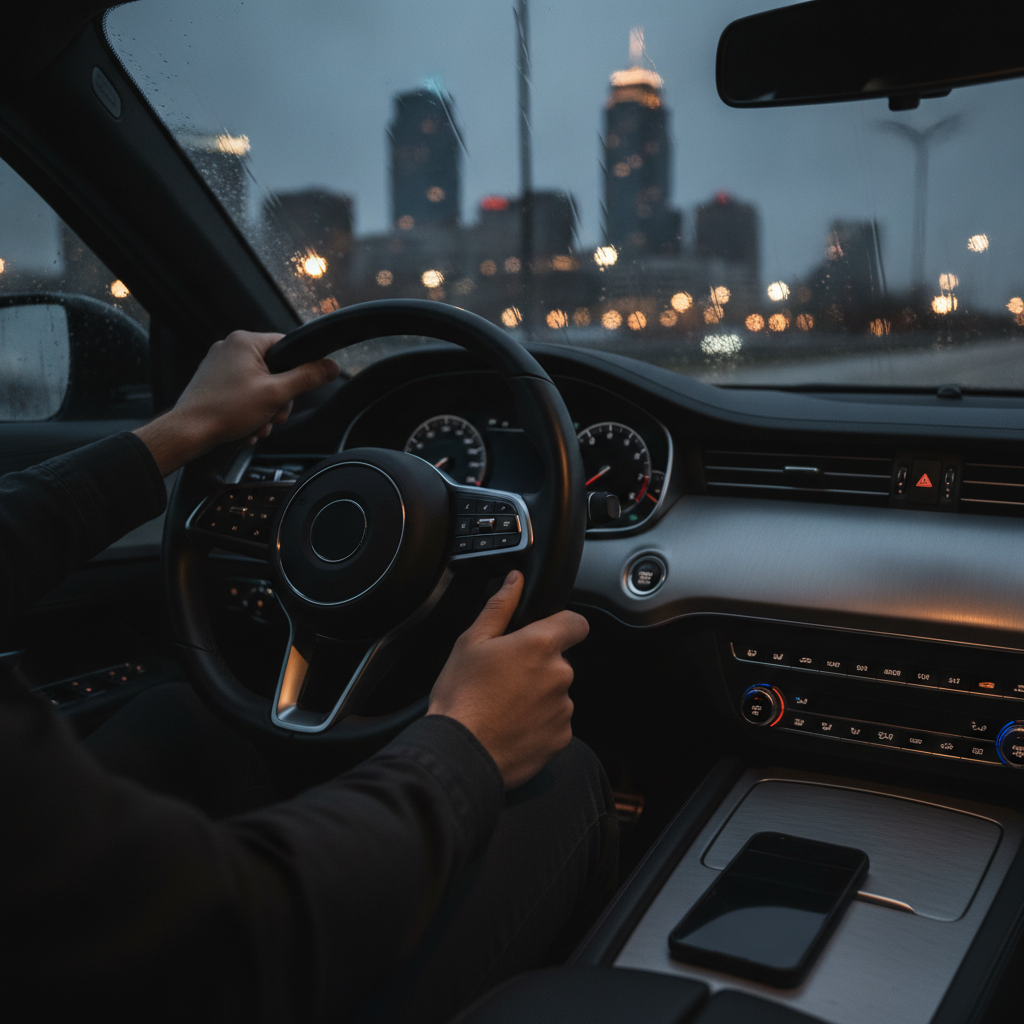
Most drivers will admit, at least privately, that they have glanced at a phone while moving. A text, a map update, a quick song change. It feels harmless until the moment it isn't. When a distracted driver slams into someone, the injured person is often left with a stack of medical bills and one stubborn question: how do you prove the other driver was on their phone? Speaking with a personal injury lawyer Kansas City residents rely on can help turn that suspicion into evidence.
Here is the challenge. Unlike a drunk driving case, there is no breathalyzer for phone use. The driver can simply say they were paying attention, and without proof it becomes your word against theirs. Insurance adjusters know this, and they lean on it. They may offer a quick settlement that assumes nobody can ever show what was happening inside the other vehicle.
The good news is that modern life leaves a long digital trail. Phones, cars, apps, and even nearby cameras record far more than most people realize. This guide walks through how distracted driving claims actually work, what kinds of evidence can reveal phone use, how fault is argued, and what steps protect your rights after a crash. Whether you are a small business owner worried about a delivery driver, a developer who spends hours behind a screen, or simply someone recovering from an accident, the goal is the same: understanding how the truth gets documented and why timing matters so much.
Why Phone Use Is So Hard to Prove at First
After a collision, the scene is chaotic. Police arrive, tow trucks line up, and everyone is focused on injuries. A driver who was texting rarely volunteers that fact, and a phone tucked into a pocket or cup holder looks the same as any other object. Officers may not ask, and when they do, the answer is usually a confident no.
This is why distracted driving is considered one of the most underreported causes of crashes. The behavior leaves no skid marks and no odor. Evidence is invisible unless someone goes looking for it, and the window to find it can be short. Data gets overwritten, accounts get deleted, and memories fade.
Working with Kendall Law Group or a similar firm early can matter because a legal team knows which records to request, how to send preservation letters, and how to build a timeline before critical information disappears. The sooner that process starts, the harder it is for the other side to explain away what the evidence shows.
The Many Forms of Driver Distraction
Phone use gets the headlines, but experts generally describe distraction in three categories. Visual distraction pulls your eyes off the road. Manual distraction pulls your hands off the wheel. Cognitive distraction pulls your mind away from driving. Texting is dangerous precisely because it combines all three at once.
Not every phone-related crash involves typing. Drivers scroll social media, read email, check delivery apps, watch videos, take photos, and talk on handheld calls. A hands-free call can still create cognitive distraction, even when it is legal. Gig workers and delivery drivers face extra temptation because their apps constantly demand attention.
Understanding the type of distraction matters for your claim. A driver reading a map is a different story from one live-streaming. Each leaves a different digital footprint, and each helps shape how a jury or adjuster perceives the choices made in the seconds before impact. A clear picture of the behavior strengthens the argument that the driver failed to use reasonable care.
What Missouri Law Says About Texting and Driving
Missouri has rules aimed at limiting handheld phone use behind the wheel, and the specifics have shifted over the years, with different standards for different drivers and situations. Because these rules can change and carry exceptions, it is wise to confirm the current requirements rather than rely on memory or a headline.
In a civil injury claim, though, a traffic violation is only part of the picture. Even if a driver was never cited, the underlying question is negligence: did they act the way a reasonably careful person would? Looking at a screen while driving can meet that definition of carelessness whether or not a ticket was written.
A citation, when one exists, can be useful supporting evidence, but its absence does not end your case. Many valid claims succeed without any criminal charge. If you were hurt and suspect the other driver was distracted, a Kansas City car accident attorney can evaluate the facts, explain how negligence is measured, and identify which records may confirm what happened.
Cell Phone Records and What They Reveal
Carrier records are often the first place investigators look. They can show the timing of calls, text messages, and data usage around the moment of the crash. If a message was sent or received within seconds of impact, that timing can be powerful, though it does not by itself prove the driver was handling the device.
Obtaining these records is not as simple as asking. In litigation, they are typically requested through formal discovery or a subpoena, and carriers keep different types of data for different lengths of time. That is why a prompt preservation request is so important.
Records also have limits. A call log shows activity but not who was holding the phone or whether a passenger was using it. Data usage may reflect background app activity rather than active scrolling. Skilled attorneys treat carrier records as one piece of a larger puzzle, pairing them with other evidence so the story holds together instead of resting on a single timestamp the defense can challenge.
The Phone Itself, Apps, and Cloud Accounts
Beyond carrier logs, the device and its connected accounts can hold detailed activity. Messaging apps, social media platforms, streaming services, and navigation tools often record when they were opened or used. Cloud backups may preserve timestamps even if a driver deletes something locally.
A forensic examination of a phone, usually done by a qualified specialist under a court order or agreement, can reconstruct what was on the screen and when. This kind of analysis is intrusive, so courts generally require a good reason before allowing it, and the request has to be specific rather than a fishing expedition.
If you are a business owner whose employee caused a crash, or a developer whose company app was running on a driver's phone, the same principle applies in reverse: records can help or hurt. Anyone involved in a crash should avoid deleting messages, wiping devices, or closing accounts, because destroying data after an accident can create serious legal trouble and damage credibility.
Vehicle Data, Dashcams, and Surveillance Footage
Cars have become rolling computers. Many newer vehicles record speed, braking, steering input, and seat belt use in the moments around a crash. Infotainment systems can also log paired phones, call activity, and text message syncing, which may line up with the timeline of the collision.
Video can be even more persuasive than data. A dashcam might capture a driver looking down for several seconds before swerving. Nearby businesses, traffic cameras, and doorbell cameras sometimes catch the vehicle approaching, showing a head tilted toward a lap or a car drifting in its lane.
The catch is that this footage is often overwritten quickly, sometimes within days. Waiting to see how you feel before acting can cost you the very video that would have settled the question. This is one reason many people choose to contact a personal injury lawyer Kansas City MO soon after a crash, so formal requests to preserve recordings go out before they vanish for good.
Witnesses, Police Reports, and Physical Clues
Human testimony still matters. A passenger in the other car, a driver stopped beside it, or a pedestrian on the corner may have seen someone staring down at a screen. Their observations are strongest when recorded early, before details blur or become influenced by later conversations.
Police reports can contain helpful notes, such as a statement from the driver, a phone found on the floorboard, or an officer's observation that the screen was lit. Even small details, like a phone mounted in an unusual position or a cracked screen consistent with being thrown in the crash, can add context.
Physical clues at the scene can also tell a story. A lack of braking marks suggests a driver never saw the hazard coming. Gradual drifting before impact can point to inattention. None of these proves phone use alone, but together they create a pattern that is difficult to dismiss, especially when combined with digital records that match the same timeline.
Common Evidence Sources at a Glance
Different types of evidence carry different strengths and weaknesses. The table below summarizes the most common sources used to show distracted driving, along with practical points to keep in mind.
How Insurers and Defense Teams Push Back
Expect resistance. Insurance companies are in the business of limiting payouts, and a claim built on distraction invites several predictable arguments. They may say the phone was in a cradle for navigation, that a passenger sent the message, or that the timing was a coincidence unrelated to the crash.
Another common tactic is shifting blame. Missouri applies a comparative fault approach, which means a person's compensation can be reduced if they are found partly responsible. A defense team might claim you braked suddenly, changed lanes, or were also distracted. Even a small percentage assigned to you can reduce what you recover.
Adjusters also rely on early, recorded statements. A casual comment like "I'm fine" or a guess about what happened can be quoted later. It is generally smart to be careful with what you say to the other driver's insurer and to understand your rights before agreeing to anything that could limit your claim.
Steps to Take Right After a Suspected Distracted Driving Crash
What you do in the first hours and days can shape the strength of your claim. These practical steps help protect both your health and your evidence:
- Get medical attention right away, even if injuries seem minor, and follow the treatment plan.
- Call the police and ask that the report note any signs of phone use you observed.
- Photograph the scene, vehicle positions, damage, and any visible phones or screens.
- Collect names and contact details for witnesses before they leave.
- Note nearby cameras on businesses, traffic poles, and homes.
- Avoid posting about the crash on social media, since posts can be used against you.
- Keep your own phone records and do not delete anything related to the accident.
- Speak with an attorney before giving a recorded statement to an insurer.
If you were injured on someone else's property rather than on the road, similar documentation principles apply, as explained in this look at Kansas City Slip and Fall Lawyers: Common Defenses Property Owners Use After a Fall.
What Compensation May Cover in These Cases
A distracted driving claim seeks to make an injured person whole after harm caused by someone else's carelessness. Economic losses typically include emergency care, hospital stays, surgery, rehabilitation, prescriptions, and future treatment. Lost income and reduced earning ability are also considered, which matters greatly for self-employed owners and freelancers whose paychecks depend on their own work.
Non-economic losses recognize the human cost: pain, limits on daily activities, emotional distress, and the disruption to relationships and routines. These are harder to put a number on, and they are often where disputes with insurers become most heated.
In some situations, evidence of especially reckless behavior may support additional damages, though that depends heavily on the facts and the law. No attorney can honestly promise a specific result. A realistic evaluation looks at the severity of injuries, the strength of the proof, available insurance, and how fault is likely to be divided. Documentation of every expense and symptom from day one makes that evaluation far more accurate.
Understanding how property hazards create liability can also sharpen your sense of how fault works generally, as discussed in How Unsafe Floors, Lighting, and Walkways Lead to Slip and Fall Liability in KC.
Final Thoughts
Proving that a driver was distracted by a phone is rarely easy, but it is far from impossible. The case usually comes together through layers of proof: carrier logs, device activity, vehicle data, video, witness accounts, and the physical story the crash itself tells. No single piece has to carry the whole claim. What matters is building a consistent timeline that makes the most reasonable explanation hard to deny.
The biggest enemy of these claims is time. Footage gets erased, records age out, and memories soften. Acting quickly to see a doctor, document the scene, avoid careless statements, and preserve evidence gives you the strongest possible foundation. It also keeps you from accidentally weakening your own position through a rushed settlement or an offhand comment to an adjuster.
If you are recovering from a crash where phone use may have played a role, you do not have to untangle the legal and technical details alone. A conversation with a qualified attorney can clarify your options, explain realistic timelines, and set the investigation in motion before critical information disappears. Every situation is different, and nothing here is a substitute for advice tailored to your facts. What stays constant is this: when someone chooses a screen over the road and another person pays the price, the law gives injured people a path to seek accountability and the resources to rebuild.