

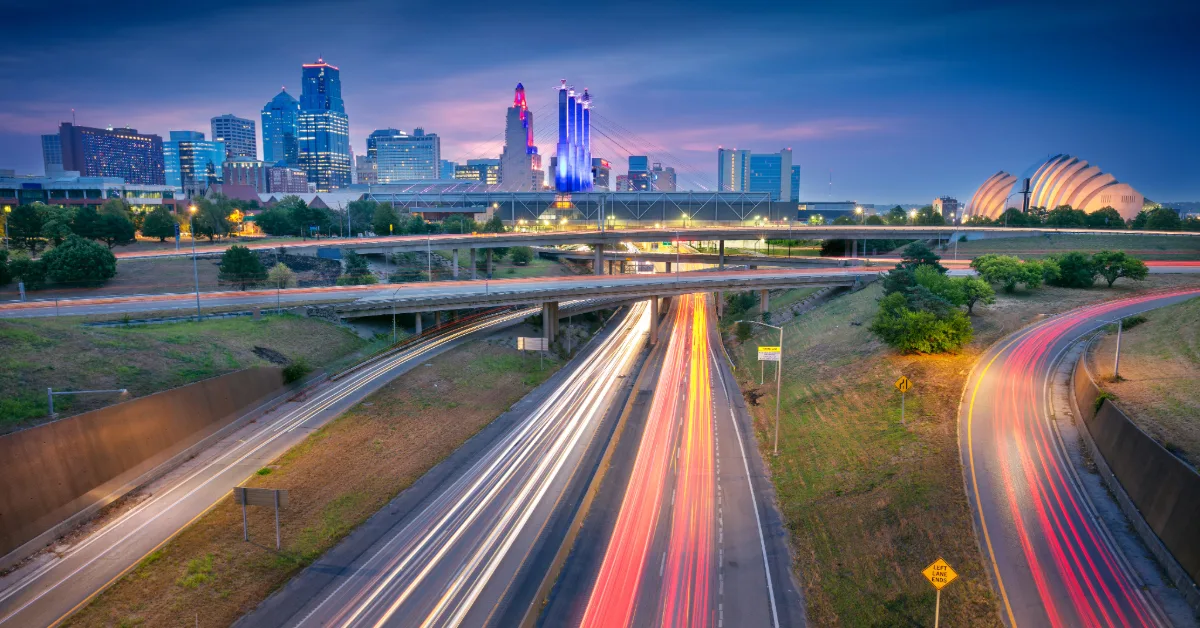
What KC Drivers Need to Know
Safety remains the top priority of the U.S. Department of Transportation (USDOT), which recently launched a new national campaign, SAFE ROADS – Safe Arterials for Everyone through Reliable Operations and Distraction-Reducing Strategies.
This initiative focuses on reducing serious crashes and fatalities by improving non-freeway arterial roads, which are among the deadliest in America. In 2024, even with a 3.8% decrease in deaths from 2023, an estimated 39,345 lives were lost in U.S. traffic crashes.
As Kansas City auto accident injury and wrongful death trial lawyers, we want to ensure you understand how this initiative impacts your commute, your rights, and your recovery after a crash.
What Are Arterial Roads?
An arterial road (sometimes called an arterial street) is a major roadway designed to move traffic efficiently over longer distances within a city, suburb or urban area. These roads serve as primary routes that connect local roads (residential or collector streets) to highways and freeways. These roads typically have:
- Higher speed limits than local roads, but typically lower than highways;
- Fewer access points (like driveways) to reduce traffic interruptions;
- Multiple lanes, often with turn lanes or medians; and
- Traffic Signals at major intersections.
These roads are often used by commuters, buses and emergency vehicles and are designed to handle high volumes of traffic.
What is the SAFE ROADS Initiative
The SAFE ROADS Initiative is a nationwide campaign launched by the U.S. Department of Transportation (USDOT) in 2024 to reduce traffic deaths and serious injuries on the most dangerous roads in America: non-freeway arterials. These roadways, which include many of the busiest surface streets in Kansas City, are where more than 50% of all U.S. traffic fatalities occur. The initiative calls on state and local governments to use data-driven analysis to identify high-crash corridors and intersections, improve signage and visibility, eliminate roadside distractions, and deploy proven safety measures. The goal is to make roads easier to navigate for drivers, pedestrians, cyclists and even automated vehicles, while ensuring compliance with federal traffic control standards. States have 60 days to identify their highest-risk segments and begin implementing safety improvements by Fiscal Year 2026.
Kansas City: A Key Battleground in National Road Safety
In Kansas City, the DOT’s initiative directly affects many well-traveled routes like:
According to MoDOT and KDOT, many of these roadways fall within high-crash zones for pedestrian fatalities, commercial vehicle collisions, and impaired or distracted driving incidents.
Why Are So Many Serious Crashes Happening in the KC Metro?
Several systemic and behavioral factors contribute:
- Increased distracted driving (phones, navigation, in-car tech)
- High-speed arterials in residential zones
- Aging infrastructure with outdated designs
- Lack of safe pedestrian infrastructure
- Poor visibility at night and during adverse weather
- Inconsistent enforcement of traffic laws
Local Statistics
While the national SAFE ROADS initiative brings needed attention to dangerous non-freeway corridors, local data confirms what many Kansas City residents already know: our region is facing a worsening roadway safety crisis. Here is what the most recent findings reveal:
Source: MoDOT, KDOT, MARC, FHWA, NHTSA (2023–2024 data)
Missouri Sets Record for Pedestrian Fatalities in 2024
According to the Missouri Coalition for Roadway Safety, 2024 marked a devastating record: 148 pedestrian deaths statewide, an all-time high. This represents a 16% increase from 2023 and nearly double the number from just five years ago. Many of these fatalities occurred in urban arterial corridors where sidewalks are lacking, crosswalks are faded, and vehicle speeds remain dangerously high.
In Kansas City, pedestrian fatalities are concentrated on:
These are exactly the types of roads targeted by the SAFE ROADS initiative. Unfortunately, many victims were hit while crossing legally, often at night, in areas with inadequate lighting or poor signage.
Kansas City Drivers: The Second Speediest in the Country
A 2024 national study ranked Kansas City drivers as the second speediest in the United States, based on data from speeding tickets, crash reports, and telematics. The city sees 9.45 speeding-related incidents per 1,000 drivers, nearly double the national average. High-speed driving is a key factor in both injury severity and fatality risk.
Arterial roads where speeding is especially problematic include:
Speeding not only increases the likelihood of a crash but also reduces driver reaction time and increases the force of impact, especially dangerous in pedestrian-heavy areas or when sharing the road with motorcyclists or cyclists.
Missouri Drivers Ranked Second Most Aggressive in the U.S.
In a 2024 Forbes Advisor analysis, Missouri drivers were ranked the second most aggressive in the nation. The ranking is based on self-reported behaviors and enforcement data, including:
- Tailgating
- Yelling at other drivers
- Cutting off other vehicles
- Running red lights
- Honking excessively or flashing lights
This type of aggressive driving contributes to road rage incidents, rear-end crashes, intersection T-bones, and failure-to-yield collisions, many of which occur on urban arterials and high-volume commuter corridors. In Kansas City, aggressive driving is often reported on:
These behaviors are not only dangerous but can rise to the level of gross negligence, increasing potential liability in civil cases.
Why This Data Matters
These trends are not just alarming, they directly impact legal liability, city planning, and victim recovery in car crash, pedestrian injury, and wrongful death cases. The SAFE ROADS initiative aims to reverse these trends through a combination of data-driven enforcement, improved engineering, and public awareness, but until that happens, Kansas City residents remain at heightened risk.
What Missouri and Kansas Must Do by Fall 2024
Under the federal directive, state DOTs must:
- Identify and list the most dangerous non-freeway arterial segments (due within 60 days)
- Submit the list to the Federal Highway Administration (FHWA)
- Begin implementing proven safety countermeasures (e.g., lighting, signage, curb redesign, signal timing) by FY2026
Local governments, including Kansas City, MO, and KS, are expected to coordinate with metropolitan planning organizations (like MARC) to improve visibility, signage, and flow of intersections.
Building on Local Progress: Past Safety Initiatives in Kansas City
The SAFE ROADS initiative builds on a foundation of local and statewide safety laws already adopted in Kansas City and Missouri, aimed at reducing distracted driving, pedestrian fatalities, and reckless behavior behind the wheel. Here are some major efforts that helped pave the way:
Red-Light Cameras Return to KC (2025)
After years of public debate and legal controversy, Kansas City reinstated red-light cameras at high-risk intersections in 2025. This move followed a noticeable spike in intersection-related crashes and fatalities, many involving pedestrians and cyclists.
Red-light cameras now monitor intersections along:
- Troost Avenue
- Prospect Avenue
- 31st Street and Linwood
- School zones in Midtown and Northeast KC
The goal: reduce injury crashes by deterring red-light running, especially in areas where constant police presence is not feasible.
Legal Impact: In addition to triggering fines, red-light camera data may be admissible in civil cases to establish fault or support a claim of negligence. This adds another layer of accountability for reckless drivers.
Crackdown on Minibike, ATV, and Street Racing Activity (2025)
As warmer weather arrived in spring 2025, Kansas City law enforcement ramped up enforcement against illegal street racing, including dangerous minibike and ATV use on city streets. These unauthorized vehicles are often driven without helmets, insurance, or licensing, and crashes involving them have spiked in areas such as:
- Westport
- The Plaza
- 18th & Vine
- Residential corridors in KCMO’s East Side
Police have impounded dozens of vehicles, and the city has begun enforcing new ordinances allowing stiffer penalties for off-road vehicle use on public streets.
Legal Impact: Victims of ATV and minibike collisions often face challenges collecting damages due to uninsured drivers and hit-and-run scenarios. These cases frequently involve UM/UIM claims and require aggressive legal investigation.
Kansas Speeding Crackdown (2024)
In response to a statewide surge in speeding-related injuries, Kansas launched its “Speeding Wrecks Lives” campaign in 2024. This initiative includes:
- Increased patrols on Kansas highways and arterial roads
- Mobile and fixed speed cameras in high-crash zones
- Public awareness efforts, especially targeting younger drivers
The campaign has focused on enforcement along:
- State Avenue
- Metcalf Avenue
- I-635 and K-10 ramps
- Urban school and construction zones
According to KDOT, speeding remains a leading factor in 30% of fatal crashes statewide.
Legal Impact: When a collision occurs in a known enforcement corridor, police may include detailed crash reconstruction, driver citations, and speed estimates in their reports, vital elements in proving fault or punitive liability in a personal injury case.
The Siddens Bening Hands-Free Law (Missouri – Effective August 28, 2023)
Named in honor of Emily Siddens and Michael Bening, two Missourians killed in distracted driving crashes, this law prohibits all drivers from physically holding or supporting a cell phone while operating a vehicle.
Under this law:
- Drivers may not hold or manually use a phone while driving (including for texting, streaming, or social media)
- Hands-free use (voice commands, Bluetooth) is still permitted
- First-time violators face fines and driver’s license points
- Violations can be used as evidence of negligence in civil injury or wrongful death lawsuits
This law applies statewide, but is especially important in Kansas City, where distracted driving has been a top contributing factor in crashes along I-435, US-71, and key urban arterials like Troost Avenue and Blue Parkway.
Vision Zero KC (Adopted 2020)
Kansas City, Missouri, formally adopted Vision Zero, a strategy to eliminate traffic fatalities and serious injuries by 2030. The plan includes:
- Prioritizing equity-based investments in high-crash corridors
- Improving pedestrian crossings and signal timing
- Upgrading signage and lighting near schools and transit stops
- Public transparency via crash data dashboards and yearly progress reports
The city’s high-injury network was mapped using crash data from 2016–2020, identifying corridors like:
High-Visibility Enforcement Campaigns
Law enforcement in the Kansas City metro has also participated in state and federal campaigns such as:
- Click It or Ticket
- Drive Sober or Get Pulled Over
- U Text. U Drive. U Pay.
These campaigns often include increased patrols, checkpoints, and public service announcements during holidays or high-travel seasons.
How SAFE ROADS May Affect Your Accident Claim
Crashes that occur on known high-risk arterials may involve increased enforcement, more thorough crash reports, or public safety audits. These factors can:
- Strengthen personal injury and wrongful death claims
- Demonstrate government knowledge of danger at a specific location
- Help establish driver negligence or municipal liability
- Influence insurance negotiations or jury decisions
How Serious Crashes Devastate Kansas City Families
The injuries we see most often on KC arterials include:
- Spinal cord and back injuries
- Traumatic brain injuries (TBI)
- Crushed limbs or internal bleeding
- Multiple fractures or burns
- Fatal injuries leading to wrongful death claims
Beyond the physical toll, families often face sudden and overwhelming medical debt, funeral expenses, emotional trauma, and permanent loss of income.
Common Damages You May Recover in an Injury or Wrongful Death Case
- Medical bills (emergency and future care)
- Lost wages and diminished earning capacity
- Pain and suffering
- Funeral and burial expenses
- Rehabilitation or home care services
How to Avoid a Collision
While not every crash is avoidable, you can reduce your risk by:
- Avoiding distractions behind the wheel
- Reducing speed on busy arterials
- Never driving under the influence
- Giving extra caution at intersections and pedestrian crossings
- Staying alert in construction or school zones
What to Do After an Auto Accident
In the wake of a car accident, certain steps are crucial for protecting your rights:
- Report the Accident: Always contact the police immediately and file an official report. Ask the officer for the report number.
- Seek Medical Attention: Prioritize your health and document your injuries.
- Gather Evidence: If possible, collect photos and witness information at the scene.
- Consult with an Attorney: Before dealing with insurance companies, contact a Kansas City Personal Injury Attorney for legal advice.
To further assist you, we offer complimentary brochures:
What to Do After a Car Accident
These guides provide valuable insights and practical steps following a car accident.
For more insightful information on car accident injury claims in Missouri, view our Attorney Blogs
Kansas City Auto Accident Injury Trial Lawyers
If you or a loved one has been seriously injured in a motor vehicle accident caused by a negligent driver in the Kansas City metro area, you deserve a legal team with the skill, experience, and dedication to fight for your future. At Kendall Law Group, we have spent more than 30 years representing victims of catastrophic personal injury and wrongful death, helping families across Kansas and Missouri recover the compensation they need to rebuild. We understand the devastating impact these accidents have, and we’re here to guide you through every step of the legal process with compassion, clarity, and unwavering advocacy.
Contact us for a free, no-strings-attached consultation.