

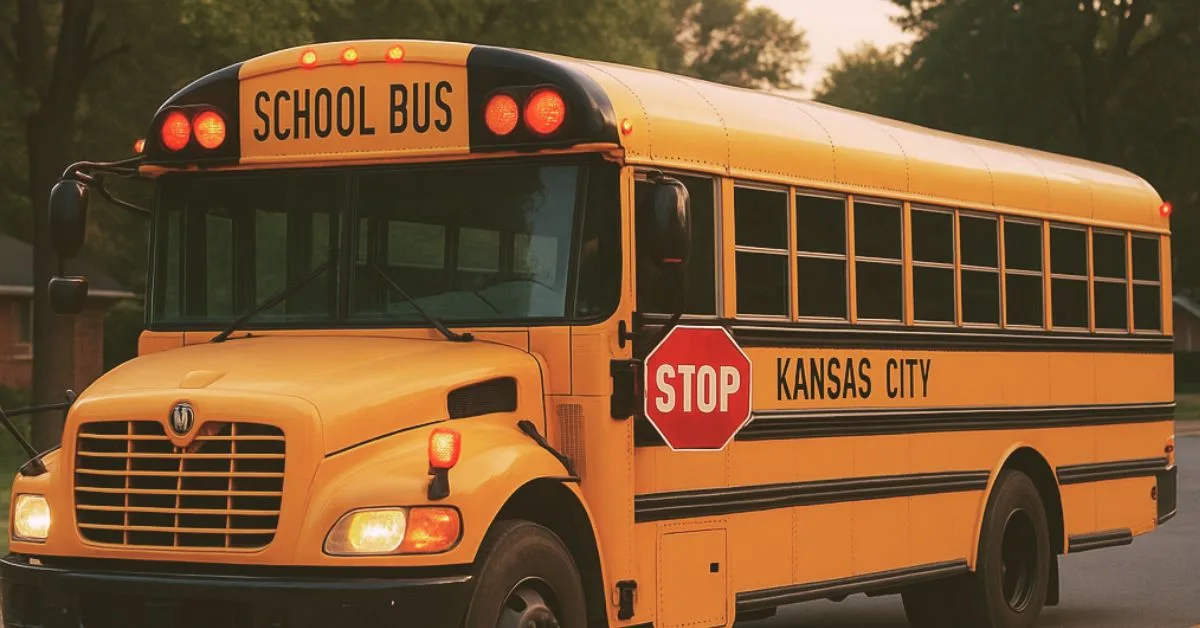
When the school year begins in Kansas City and the surrounding areas, the daily commute changes significantly. Bright yellow school buses once again fill the streets, carrying precious passengers to and from school. Every driver shares a vital responsibility: ensuring that these children travel safely.
The laws regarding school bus safety are straightforward, but the stakes are extraordinarily high. A single moment of inattention or a poor driving decision can lead to devastating consequences, including severe injuries or the loss of a life. In addition, violations can result in substantial fines, driver’s license suspensions, and long-term damage to a driving record.
Whether you are driving in Kansas or Missouri, it is important to know the specific laws in each state, as Kansas City spans both sides of the state line. Understanding these rules can protect not only the lives of children but also your legal standing as a driver.
When You Must Stop for a School Bus in Kansas and Missouri
Approaching a Stopped Bus from Behind
If you are behind a school bus that has its red lights flashing and its stop arm extended, you are required to come to a complete stop. This applies in every situation, whether you are on a small neighborhood street or a busy multi-lane roadway. There are no exceptions to this rule.
Approaching from the Opposite Direction
If you are approaching a stopped school bus from the opposite direction, you must also stop unless a specific legal exception applies under Kansas or Missouri law.
How Long You Must Remain Stopped
Drivers may proceed only when:
- The school bus begins moving again.
- The bus driver signals that it is safe to proceed.
- The flashing red lights are turned off and the stop arm is retracted.
It is important to note that drivers must stop even if they do not immediately see children near the bus. Children can appear suddenly from blind spots, and taking the risk of passing is both illegal and extremely dangerous.
Exceptions to the Stop Requirement
Kansas Exceptions: Divided Highways
In Kansas, if there is a physical median or barrier that separates opposing lanes of traffic, vehicles traveling in the opposite direction from a stopped school bus are not required to stop.
Missouri Exceptions: Four-Lane and Controlled-Access Highways
In Missouri, there are two additional exceptions:
- Drivers traveling in the opposite direction on a road with four or more lanes are not required to stop for a stopped school bus.
- Drivers are not required to stop if the school bus is in a loading zone where children are not permitted to cross the road.
If there is any uncertainty about whether an exception applies, the safest choice is always to stop until the school bus resumes its route.
Penalties for Passing a Stopped School Bus
Both Kansas and Missouri take violations of school bus safety laws very seriously.
Kansas Penalties:
- First offense: $315 fine.
- Repeat offenses within five years: Up to $1,000 fine.
Missouri Penalties:
- First offense: 90-day driver’s license suspension.
- Repeat offenses: longer suspensions, points on your driving record, and significant increases in insurance premiums.
Beyond fines and suspensions, drivers who pass a stopped school bus and cause injury to a child may face criminal charges and civil liability.
Why These Laws Exist: Understanding the Risks
The Unpredictability of Children
Children may cross the road unexpectedly, even when they appear to be safely on the sidewalk or in a designated waiting area.
Limited Visibility Around Buses
School buses are large vehicles that can obstruct a driver’s view. A child stepping out from in front of or behind a bus can be completely hidden from sight until they are already in the roadway.
The Impact of Speed
Even at relatively low speeds, such as 25 miles per hour, a collision between a vehicle and a pedestrian can cause catastrophic injuries or be fatal. The margin for error is very small, which is why these laws exist to protect the most vulnerable travelers on our roads.
Safe Driving Tips Around School Buses
- Stay alert in school zones and residential neighborhoods.
- Keep a safe following distance behind a school bus to allow time to stop.
- Prepare to stop as soon as a bus activates its yellow warning lights.
- Never attempt to pass or “beat” a school bus that is preparing to stop.
- Eliminate distractions, including mobile devices, when driving near school bus routes.
Legal Consequences Beyond Traffic Citations
The consequences of violating school bus safety laws can extend far beyond fines and points on a driving record. If an accident occurs, drivers may face:
- Criminal charges such as reckless driving, vehicular assault, or, in tragic cases, manslaughter.
- Civil lawsuits from the injured child’s family seeking compensation for medical expenses, pain and suffering, and other damages.
- Permanent increases in insurance premiums and long-term effects on the driver’s ability to maintain a valid license.
School Bus Accident Injury: Who May Be Liable
When parents place their children on the school bus each morning, they trust that the bus driver, the school district, and other drivers on the road will take every possible measure to keep those children safe. Unfortunately, accidents involving school buses do occur, and when they do, the results can be devastating. Determining who may be legally responsible for a school bus accident is essential to ensure that injured victims and their families receive the compensation they are entitled to under the law.
Potentially Liable Parties in a School Bus Accident
School Bus Driver
If the accident was caused by the negligence of the bus driver, such as speeding, distracted driving, operating the bus while impaired, or failing to follow traffic laws, the driver may be held legally responsible. In many cases, the driver’s employer, often the school district or a private transportation company, may also bear liability under the legal doctrine of vicarious liability.
School District or Private Bus Company
The entity that owns and operates the bus may be liable if it:
- Failed to properly train or supervise drivers.
- Engaged in unsafe hiring practices.
- Did not maintain the bus in a safe operating condition.
- Failed to enforce safety protocols for loading and unloading children.
Other Motorist
If another driver caused the collision, such as by illegally passing a stopped school bus, running a red light, or driving recklessly, that driver may be held responsible for the resulting injuries.
Vehicle or Equipment Manufacturers
If a defect in the bus or any of its components, such as brakes, tires, or safety restraints, contributed to the crash, the manufacturer or distributor may be liable under product liability laws.
Government Entities
In certain cases, unsafe road design, poor signage, inadequate lighting, or a lack of proper traffic control devices may contribute to a school bus accident. In these situations, a city, county, or state agency may bear some responsibility. Claims against government entities are subject to strict notice requirements and filing deadlines, making prompt legal action critical.
Why Liability Matters
School bus accidents can cause catastrophic injuries, including traumatic brain injuries, spinal cord damage, fractures, and significant emotional trauma. Identifying all potentially responsible parties is critical because:
- More than one party may share liability.
- Insurance coverage can vary significantly depending on the defendant.
- Certain defendants, such as school districts or government agencies, have special legal protections and shorter deadlines for filing claims.
Compensation for School Bus Accident Injuries
If your child has been injured in a school bus accident, you may be entitled to recover damages for both the financial costs and the emotional impact of the crash. The specific amount and type of compensation available will depend on the severity of the injuries, the circumstances of the accident, and the parties found liable. Generally, the following are compensable damages:
Economic Damages – Financial Losses
These are measurable costs directly related to the accident, which may include:
Medical expenses – hospital bills, surgeries, physical therapy, medications, medical devices, and future care needs.
Lost wages – income lost while you or your child recovers, including future loss of earning capacity in severe injury cases.
Property damage – repair or replacement of damaged personal property (e.g., eyeglasses, electronics).
Special education or accommodations – costs for tutoring, adaptive equipment, or other support if a child’s injury impacts learning.
Non-Economic Damages – For Human Impact
These compensate for the real, but less tangible, effects of an injury:
Pain and suffering – physical pain caused by the injury and recovery process.
Emotional distress – anxiety, depression, PTSD, or fear caused by the accident.
Loss of enjoyment of life – inability to participate in sports, activities, or hobbies once enjoyed.
Loss of consortium or companionship – impact on family relationships.
Punitive Damages – In Cases of Extreme Misconduct
In rare cases involving gross negligence or willful misconduct, such as a driver operating under the influence or a company knowingly putting unsafe buses on the road, courts may award punitive damages to punish the wrongdoer and deter similar conduct.
The Importance of UM/UIM Insurance
In the event your child is injured in a school bus accident caused by an uninsured motorist or a driver who carries the state minimum liability limits of $25,000.00, your family needs to be protected. We recommend reviewing your auto insurance policy. For more information, read Auto Insurance Recommendations from a Catastrophic Injury Attorney.
What to Do After a School Bus Accident
If your child or another loved one has been injured in a school bus accident:
- Seek immediate medical attention.
- Report the accident to law enforcement and the school district.
- Preserve all available evidence, including photographs, witness contact information, and medical records.
- Contact an experienced personal injury attorney as soon as possible to protect your rights and ensure that all filing deadlines are met.
School bus accidents are complex cases that often involve multiple defendants, overlapping insurance coverage, government regulations, and strict filing requirements. Having an attorney who understands these unique challenges can make the difference between an incomplete settlement and the full, fair compensation you and your family deserve.
Kansas City Auto Accident Injury Trial Lawyers
Stopping for a school bus is more than a legal requirement; it is a moral obligation that protects the lives of children in our community. Unfortunately, our attorneys have seen the devastating and often irreversible consequences that occur when drivers ignore these vital safety laws.
If your child has suffered catastrophic injuries or has been tragically killed in a school bus-related accident in the Kansas City Metropolitan Area, the auto accident injury trial attorneys at Kendall Law Group are here to help. We provide compassionate, experienced, knowledgeable, and aggressive legal representation when you need it most. For over three decades, we have been helping individuals and families put their lives back together after catastrophic injuries and wrongful deaths, guiding them through some of the most difficult moments of their lives.
📞 CALL NOWor reach out HERE for a free consultation and learn how we can help you move forward.